Can You Use Nizoral on Your Beard for Dandruff

Beard dandruff is a pain. Regular dandruff shampoos don’t always fix it, which is why a lot of men turn to Nizoral. It’s known for sorting out scalp flakes, but is it safe to use on your beard? Let’s break it down simply.
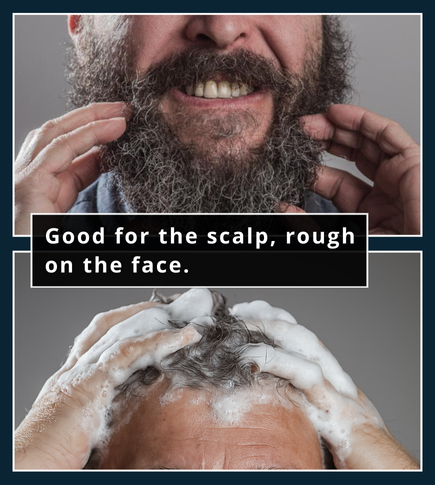
Split image of man washing hair with shampoo and same man with beard irritation from harsh scalp shampoo.

Why Normal Dandruff Shampoos Don’t Always Work

Beard flakes are awkward because they can all look the same at first. Dry skin, product build-up, irritation and dandruff-type flaking connected to Malassezia yeast can all show up as white bits in the beard.

Head & Shoulders and Neutrogena T/Gel make sense on a flaky scalp, but beard skin is a different setting. It sits on the face, gets covered by coarse hair and has to deal with beard oil, balm, face wash and shaving irritation too.
Shampoo that helps your scalp doesn't automatically do the same job under your beard. Find out about Beard Dandruff Causes and Treatment.
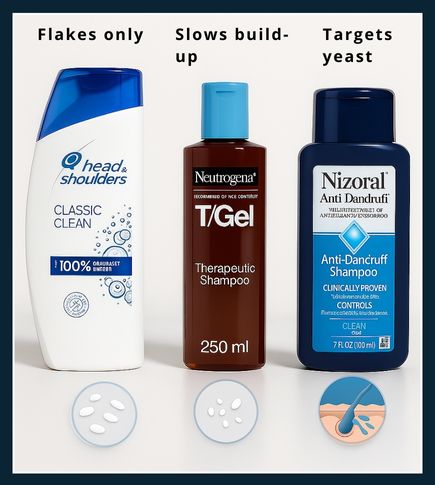
Comparison of Head & Shoulders, Neutrogena T/Gel, and Nizoral shampoos with labels showing flakes only, slows build-up, and targets yeast.

Nizoral For Beard Flakes vs Other Dandruff Shampoos

Head & Shoulders and T/Gel can make sense when flakes are the main thing you can see, but Nizoral sits in a different lane because it contains ketoconazole.

The reason it gets mentioned for beard dandruff is not because it is a beard shampoo. It is because some beard flakes behave more like scalp dandruff than plain dry skin.
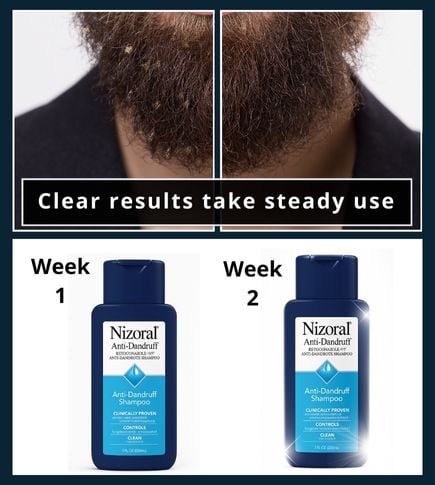
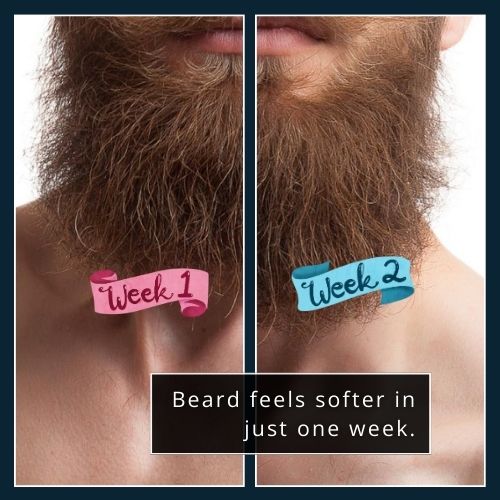
Nizoral 1% shampoo bottle shown over a one to two week timeline to suggest results.

How Well Does Nizoral Work?

Not everyone gets instant results. You might notice fewer flakes after one wash, or it can take a couple of weeks before you know whether Nizoral is working.

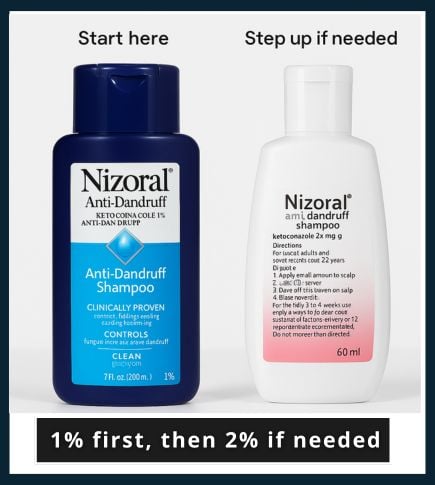
The 2% version is the stronger formula. But what matters here is that it’s going on your face. The skin under your beard can behave differently to your scalp, so the real test is whether it can clear the flakes without making your skin feel worse.
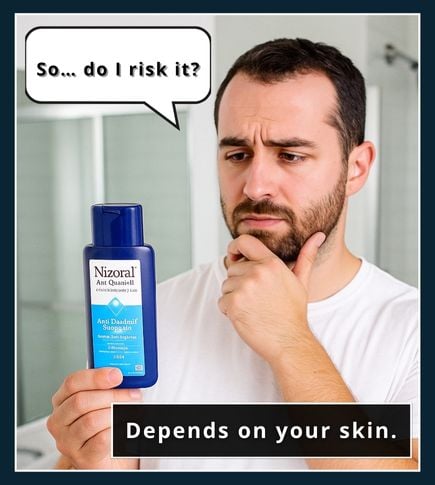
Close-up of a bearded man with Nizoral shampoo and a faded question mark symbol to suggest uncertainty about facial use.

Can You Use Nizoral on Your Face?

Here’s the grey area. Nizoral says they do not recommend it for facial hair.

So the safest way to look at it is this: Nizoral is a scalp dandruff shampoo, not a beard product. The reason it still comes up in beard dandruff conversations is the ketoconazole. It explains the interest, but it doesn't change what the product was made for.
Nizoral 1% blue US bottle and Nizoral 2% white UK bottle shown with start and step-up labels.

How to Use Nizoral Safely on Your Beard

If you’re trying it on your beard, don’t treat it like a normal beard wash.

Test a small patch of skin first. Keep it away from your eyes and mouth. Use a tiny amount on a wet beard, rinse it out properly and don't leave it sitting on your face longer than the label says.
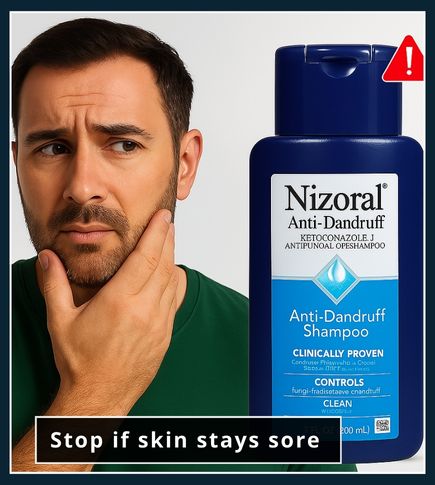
Man with beard touching irritated skin next to a Nizoral shampoo bottle with a warning symbol.

When to Stop and See a Dermatologist About Beard Dandruff

If Nizoral leaves your skin burning, red or itchy in a way that does not calm down, stop using it.

And if a few weeks go by with no improvement, see a dermatologist. Beard dandruff is not always a shampoo problem. You may need a cream, a different treatment or something to calm the irritation.
You must not rely on the information on our website as an alternative to medical advice from your doctor or other professional healthcare provider.

Leave a Reply

Your email address will not be published. Required fields are marked *

crosschevron-down