Create Your Night Wind-Down Space

After a long day of work, dealing with people, noise, and constant demands, your brain needs a clear signal that the day is actually over. That’s where a dedicated wind-down space comes in. This idea works whether you live in a big house, a shared flat with one room, a family home, or a small apartment.
It’s not a full man cave with big TVs, gaming consoles and gadgets. It’s a simple, separate spot that tells your mind the bed is for sleeping, the living room sofa is for normal chilling. This space sits in between.

Why A Night Wind-Down Space Makes A Difference

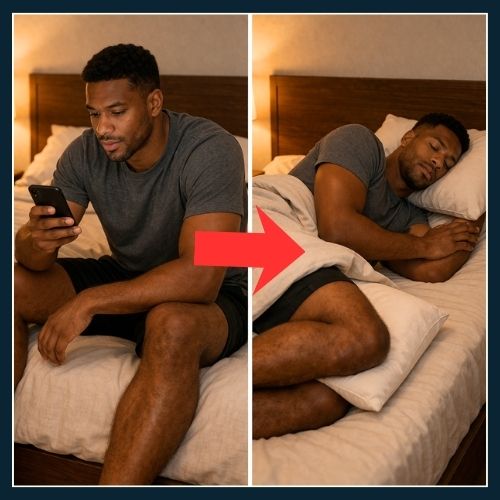
Most of us come home and crash on the sofa or climb straight into bed with the phone. The wind-down is where you’ll sit for for a while before bed. 

You clear your head, let the stress of the day drop off, and only move to bed when you can’t keep your eyes open. Over time this helps you fall asleep faster, sleep better, and wake up less groggy.

Wind-down Space For Any Living Situation

If you only have one room (shared house or studio)

Use a corner of the room that is furthest from your bed. Add a pump-up chair or a large floor cushion with a smaller one for a back rest, and cover it with a blanket. 

Face it away from the bed if possible, or use a rug or towel on the floor to mark the boundary. Keep a container or bag nearby for your wind-down items so you can pull it out at night and put it away in the morning. 

The goal is to make it feel different from both your work area and your sleeping area.

If you have your own bedroom (living with family or in a flat)

You might have a bit more space and freedom in a flat or with family. 

Get a compact armchair, a good-quality bean bag, or a low lounge-style seat. It needs to be supportive enough so you can relax for longer than five minutes without shifting around. 

Set up near a window if you have one, or against a wall that isn’t right next to the bed. Try the space between your wardrobe and desk. Keep at least a couple of metres between this spot and your bed so your brain doesn’t treat them as the same place.

If you have more space (spare room, garage corner, or bigger house)

A hammock or a wide hanging chair, works really well.

Try a camping bed with a few cushions or a thicker floor setup that lets you lean back properly. Just make sure that you’re not sitting upright. You want to be able to switch off without feeling like you’re still “on.”

Set it up in a quiet corner where you won’t be pulled back into everything else going on in the house. It should feel separate, but not like you’ve created another living room.

What to Keep in Your Wind-Down Space

Don’t clutter your wind-down space with general ‘stuff’. You just need a few items that help you settle down naturally, so you’re not getting up and down once you’ve settled in.
Basket full of items for winding down including a book, wired headphones, a rolled up hoodie. Around the basket on the floor there is a glass of beer, a phone and some snacks.

A Few Things To Help You Switch Off

  • Something comfortable to sit on
  • A drink (whatever works for you)
  • Some snacks that aren’t too heavy
  • Your phone on charge (put it on Do Not Disturb)
  • A small notebook and pen for brain dumping thoughts
  • Headphones or earbuds
  • A book, magazine, or Kindle
  • A soft blanket or plush hoodie for comfort
If something isn’t getting used, take it out. If something makes the space easier to use, add it in.

How to Actually Use the Space

How To Start Your Wind-Down Time

Start using it about an hour (or even 45 minutes) before you plan to get into bed. Sit down, get comfortable, and do whatever helps you unwind. Some men listen to music, others read, some just stare at the wall and let their mind settle. 

The main rule is no intense work, no stressful YouTube videos, and no endless scrolling through social media. This is the time to let the day finish.
When you feel properly switched off - your shoulders drop, your mind slows down - then move to your bed. That physical move from the wind-down spot to bed becomes a strong sleep signal for your brain.
a man working on his laptop in his wind down space instead of getting ready to drift off to sleep.

What Not To Do In This Space

Try not to turn this into another place where your brain stays switched on.
Avoid bringing work into it, even small things like checking emails or replying to messages. It pulls you straight back into the day.
Heavy scrolling does the same thing. If you sit there jumping between apps or watching random videos, your head never really settles.

Keep it simple. If something leaves you feeling more wired than when you sat down, it probably doesn’t belong in this space.

Making It Work in Shared or Noisy Homes

If you live with other people, a quiet wind-down space isn’t always easy. You just need a way to block things out.

Use noise-cancelling earbuds or even basic earplugs to cut down background noise. To make sure other people get the message, a “Do Not Disturb” note, a screen, or a curtain can help create a clear boundary.

If the house gets louder in the evening, start your wind-down earlier. If your only quiet time is later, don’t force a full hour. Even twenty minutes in your space works.
“I end up just going straight to bed”
That’s because your bed is comfortable for both sitting and lying down. The fix is to make your wind-down spot good for sitting up (reading, writing, thinking), but not set up for lying down. Keep your bed strictly for lying down and sleeping,
“I keep forgetting to use the space”
Set a simple reminder. Put a Post-it note on the inside of your bedroom door or set a phone alarm that says “wind-down time.” After a few days it usually becomes automatic.
“It feels pointless after a few days”
Just stick with it for two full weeks. It takes time for your brain to get used to the routine. The benefits usually kick in after that.
There's more where that came from:
crosschevron-down