How Hard Water Wrecks Men's Hair

If the tap water where you live is hard, it is doing things to your hair that no shampoo alone is going to fix. The water is the problem, and until that gets addressed, it is very easy to spend years switching products and wondering why nothing ever works the way it should.

Why Hard Water Changes The Way Hair Looks And Feels

man feels resistance as he tries to run his hands through his hair. THe hair has a rough and dry texture

Hair Feels Dry And Rough

Hair that used to be soft and manageable now feels rough to the touch. It takes on a gritty, coarse texture and feels almost heavy or sticky compared to what it used to feel like. That roughness is a physical change to the surface of the hair, and it does not go away no matter how many times the hair gets washed with the same water that is causing it.
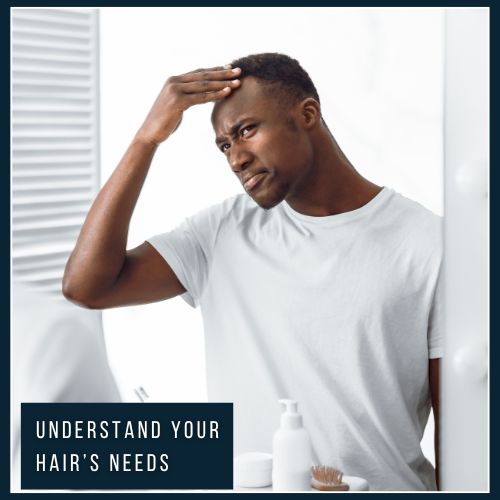
man looking at his reflection in lift mirror and notices his hair looks thinner

Hair Can Look Thinner Without Hair Loss

The hair looks thinner, flat and lifeless even though none of the hair is actually falling out.
The hair is still there. It just has no volume. It looks limp, and it doesn’t have the kind of natural thickness and movement that it used to have.
man washing his hair but only a think weak lather is visible

Why Shampoo Suddenly Stops Working Properly

Shampoo needs soft water to actually do the job of lifting dirt from your hair. In hard water shampoo barely foams and it leaves a residue behind. Even after rinsing it out, the hair still feels like it needs a good wash. It’s the same shampoo, but with completely different results just because of the type of water it’s mixed with.
evidence of brittle hair - broken hairs in the sink and comb after hair styling

Hard Water Can Make Hair More Brittle

Hard water makes your hair strands fragile over time. Instead of being flexible and bending under pressure, they just snap off. And it doesn’t take much for them to snap - basic brushing, styling, or just pulling a t-shirt over your head becomes enough to break them off.

You’ll notice shorter strands of hair everywhere, including your hair tools, the sink, shower tray, and on your towels. It may look like the hair is falling out, but actually it’s breaking off. The root is fine, but the hair shaft is just too weak to stay in one piece anymore. That difference is explained properly a bit further down.

What Hard Water Is Actually Doing To Your Hair

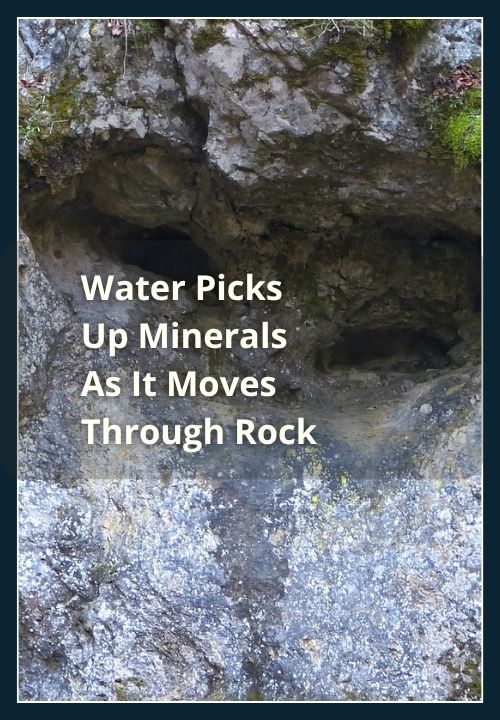
limestone rock with water pouring off it

What Is Hard Water

Chalk and limestone sit under a huge chunk of the UK, and as water passes through them it picks up calcium and magnesium along the way.
By the time that water reaches your taps, it is perfectly safe to drink, but it’s full of dissolved calcium and magnesium minerals. Those ‘hard’ minerals don’t evaporate when the water dries, they just stick to the hair.
cloase up of hard water mineral build up on strands of hair.

Mineral Buildup Coats The Hair Shaft

You can use hard water to wash your hair just once and nothing much will happen. But, months of daily washing leaves behind enough layers to really change how the hair looks, feels and behaves.
Over time the buildup leaves a rough uneven surface over the hair strands. So that coarse texture you can feel is not your hair, it’s the residue sitting on top of it. It also changes how light reflects off the hair, which is why hard water hair doesn’t look as shiny or healthy - even when it’s clean.
close up of conditioner sitting on top of hair strands instead of absorbing into the hair

Why Moisture Struggles To Reach The Hair

Think about what conditioner is supposed to do - it gets into the hair and puts moisture back in. Except the mineral layer that builds up on the hair acts like cling film around the shaft. Conditioner, natural oils, moisture from a hair mask - none of it can get in properly. They just sit on the outside until you rinse them off. That’s why hair can still feel dry and rough even after using loads of conditioner.
man looking at hair strands in his hand. He looks worried about whether the hair strands represent breakage or excess shedding.

The Difference Between Breakage And Hair Loss

Hair loss means the hair is coming out from the follicle. Breakage means it is snapping somewhere along the shaft. A hair that has genuinely fallen out will have a tiny white bulb at one end - that is the root. A hair that has broken off will not. So have a proper look next time there are a bunch of strands on your pillow or in the shower.

Some Hair Types Struggle More With Hard Water

Hard water affects every hair type eventually, but some people are going to notice the damage a lot sooner than others.
split comparison of curly hair with definition and without definition to show the effect that hard water can have on curly hair

Curly Hair And Hard Water

Curly hair is naturally more porous, which is just a way of saying it absorbs everything more easily - including the minerals in hard water. Curls need moisture to keep their shape, so when minerals get in the way of that the curls go frizzy, dry, and unpredictable.
Someone with straight hair in the same house might barely clock the water at all, while the person with curly hair has watched their definition disappear and their hair go dry and unruly without any obvious reason.
man with volumising products notices that they are not working on his hair anymore.

Fine Hair And Flatness

Fine hair is already working against gravity on a good day. To get volume in any hairstyle, it needs to be as light as possible. But, mineral buildup adds weight to every single strand, and because fine hair just can’t handle that extra load, it lies flat and stays flat regardless of what volumising products get put on it.
close up of bleached hair which looks rough and faded compared to how it looked after a salon visit.

Bleached Or Chemically Treated Hair

The chemicals used in bleach and colour leave the hair more open and vulnerable than it was before. Hard water takes full advantage of that as it seeps into that open structure and leaves behind lots of mineral deposits on the way through. Colour fades quicker than it should, the hair gets brittle faster, and it just never looks or feels the way it did leaving the salon.
man with long hair shows health moisturised roots and dry rougher ends.

Long Hair Often Shows Damage Faster

With longer hair the ends have been washed in hard water more times than the roots have. They break off faster, split ends get bad quickly, and the hair always seems to look healthy and shiny near the scalp and rough and damaged further down. Anyone trying to grow their hair out in a hard water area knows the frustration of trying to get smooth uniform length and how that moment never seems to arrive.

What Hard Water Does To Your Scalp

man getting dressed notices his scalp has started to itch.

Why The Scalp Suddenly Feels Itchy After Washing

Hard water scalp itch has terrible timing. The shower feels fine, the hair feels clean, and then somewhere between towel drying and getting dressed the scalp starts prickling. By the time it becomes properly annoying, most people are blaming the shampoo long before they ever think about the water.
Peppermint shampoos and cooling scalp products fly off shelves in hard water areas. They don’t solve anything - they just swap the itch for a cooling sensation that lasts long enough to forget about it for a few hours. The itch comes back after the next wash every single time. Anyone who has become dependent on peppermint or cooling products just to feel comfortable after washing is seeing a sign that the water is the issue, not diet, stress or hair products.
a open bathroom cupboard full of anti itch hair and scalp products.

Why Some Scalps Never Feel Fully Clean

In soft water, shampoo lathers easily and the rinse feels slippery and takes time to clear properly. In hard water the lather barely builds and the rinse is over almost too quickly. That should not feel like a good thing - it means the water ran off fast and left a layer of mineral residue behind on the scalp. Hard water areas have an unusually high turnover of half-used bottles for exactly this reason - no shampoo is going to out-clean the water that is delivering the residue in the first place.
close up of man's nails which shows evidence of scratching a scalp with softened residue

Hard Water Can Create Flakes That Do Not Behave Like Dandruff

Dandruff is oily, yellowish, and caused by a fungal imbalance. Hard water flakes are drier, paler, and completely unbothered by anti-dandruff shampoo. They show up on dark clothes, and they come back after every wash. Some people in hard water areas never see flakes at all - instead when they scratch their itchy damp scalp, their nails get filled with a soft, cream-coloured residue that looks like the scalp is melting off.
That does not automatically mean something serious is wrong with the scalp itself. In hard water areas the scalp ends up carrying a mixture of mineral deposits, dead skin, and natural oils. The moisture softens it together and creates a gross mixture.
man blow drying his hair in the bathroom. He has left the door open so that the steam can escape.

Heat And Steam Can Make The Scalp React More Aggressively

The source of the steam does not matter - a shower, a bath, or a hot sink all have the same effect on a hard water scalp. Heat opens the pores and warm moisture softens the mineral residue sitting on the skin. The itch that was just about manageable after a normal wash becomes intense in a steamy room. Some people only find relief by drying the scalp out quickly with a hairdryer, which sounds extreme until you’ve actually experienced the sensation.
Keep the door open to stop steam building up, finish with a cooler rinse to close the pores back down, and dry the scalp properly rather than leaving it damp. None of that removes the hard water itself but it cuts down how badly the scalp reacts.
strands of hair showing greasiness near the roots and dryness near the ends.

Why The Roots Feel Greasy While The Hair Still Feels Dry

What throws people is the combination - roots that go greasy fast and ends that stay dry no matter what. Natural scalp oils are supposed to work their way down the hair shaft and keep the lengths conditioned. Mineral buildup acts as a barrier and stops them from getting very far. Washing more often only makes the scalp produce more oil to replace what gets stripped away, and the dry ends stay exactly as rough as they were before.

Signs Your Tap Water Might Be The Problem

close up of sink faucet and plug hole which shows evidence of hard water mineral build up

White Residue And Mineral Buildup

Hard water leaves evidence around the house. The most obvious one is the white residue that it leaves around the taps and showerhead. The scale that forms inside a kettle, the film on a glass after air-drying, the white marks left around the sink - all of that is calcium and magnesium depositing wherever the water touches a surface. Your hair is just another surface it comes in contact with every single day.
Uk map showing hard water areas

Hard Water Areas In The UK

Not everywhere in the UK has the same water. London and the south east are hard water territory. Further north and into Scotland and Wales it softens up a lot. So if the hair was fine back home but then became a dry difficult mess after moving to London, the water is almost certainly why.
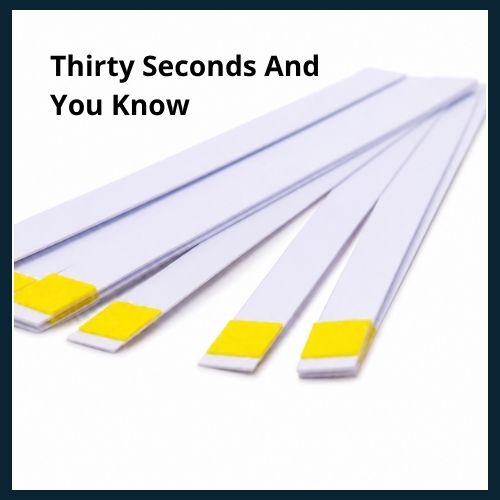
Close up of hard water test strips.

How To Check Your Local Water Hardness

Most UK water suppliers have a postcode checker on their website that shows exactly how hard the local water is. That takes about thirty seconds. Alternatively, home test strips are available online for next to nothing and give a result within a few minutes of dipping them in tap water. Either way, there is no need to guess.

What Actually Helps With Hard Water Damage

Anyone selling a single product as a complete hard water hair fix is overselling it and should be ignored. The real solution is a straightforward routine done consistently.
regular shampoo and chelating shampoo on a bathroom shelf

Clarifying And Chelating Shampoos

Regular shampoo was never designed to remove mineral buildup, so it just does not. Clarifying shampoo cleans more deeply, but it still mainly deals with product buildup and oil. Chelating shampoo is the one that's actually made to grab onto those minerals and pull them off the hair. Once a week is usually plenty.

Portable Water Softeners

Showerhead filters tackle chlorine and odour, but cannot remove calcium and magnesium. Portable water softeners treat the water before it reaches the showerhead. The initial setup looks more complicated than it is. After that it's just there, doing its job quietly in the background. For anyone dealing with scalp irritation, rough hair, or mineral buildup, a portable water softener produces results that filters and shampoo changes simply cannot.
apple cider vinegar is being poured into a bottle of water for an apple cider vinegar rinse.

Apple Cider Vinegar Rinses

Apple cider vinegar is acidic, which means it breaks down the mineral deposits sitting on the hair. Mix a bit into a litre of water, pour it over after shampooing, leave it a couple of minutes and rinse. It smells like vinegar until the hair dries, then nothing. This one sounds odd but it does work.
man doing a deep conditioning treatment at home. He has a plastic shower cap on and a towel around his shoulders. He is giving the treatment time to work while he does other tasks.

Deep Conditioning And Moisture Recovery

Between chelating washes the hair still needs help, and that is where a deep conditioning hair mask helps. Leave it on for fifteen to twenty minutes which gives it enough time to work instead of just sitting on the surface. It doesn’t remove mineral buildup, it just gives back some of the moisture and flexibility that hard water has removed from the hair. Be patient - hard water damage that has been building for months is not going anywhere in a fortnight.

When It Is Time To See A Doctor Instead

If the scalp is still sore, inflamed, or producing heavy flakes after the water gets sorted, the water was probably not the only issue. Seborrheic dermatitis and eczema both look similar to hard water irritation and need a different kind of attention entirely. And if the concern is hair loss at the hairline, crown, or in patches - not just breakage and texture, that conversation belongs with a dermatologist or experienced trichologist.
Check These Out Before You Go
crosschevron-down