Why Clothes Fit Fine Standing Up Then Betray You When You Sit Down

You chose a good outfit, checked yourself out in the mirror and you looked good. Then you sat down at your desk, or at dinner, or in the car, and something pulled, pinched, or dug in that wasn't doing any of that two minutes earlier.

The Changing Room Lies By Accident

Standing Still Is The Easiest Test

In the changing room, you stand up straight and face the mirror, and that’s about it. At that point, you’re mainly checking whether it looks right on your body, not whether it can survive your day. You turn to the side, maybe tug the hem a little bit, and if nothing looks strange, that’s usually enough to decide whether it’s coming home with you or going back on the rail. It just doesn’t occur to most people to sit down and check the fit in a different position, so nobody bothers.

What Sitting Does To The Fit

The First Sit Tells The Truth

The real test isn't the changing room, it's the train. You sit down and feel the fabric tighten across your thighs. Then you notice the pull across the crotch, and now you’re sat there trying not to move because the trousers are doing far too much in front of strangers. You decide it’s best to stand for the rest of the journey, holding the rail like a man with somewhere very important to be.
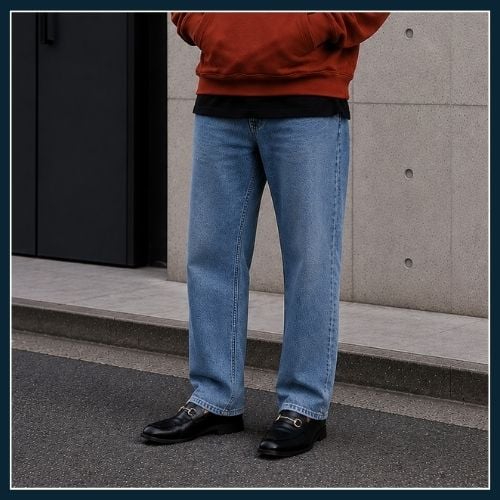
It can happen in the car too. You leave the house for the party thinking the new trousers look sharp, then getting into the driver’s seat turns into a small operation. One hand on the door frame, one hand pulling the fabric up a bit so the seam doesn’t try to cut you in half, then you have to work out how to reach the pedals without testing that seam any further.

The Waistband Has Less Room Than It Thought

You're on a dinner date, tucking into a tasty meal. At first, your trousers feel just fine. You get through the starter, then halfway through the main, you realise you can't ignore the waistband anymore. You sit up straighter. You shift in the chair. But it keeps digging in, making you very aware of the exact line where fabric meets skin.
At this point, you know the food won't go down until the trousers come off. The band itself gets tight, then sore, then faintly itchy, and you'd swear sweat has gathered exactly where the fabric's cutting in. 
Would it be more comfortable under your belly than over it? Would anyone notice if you used the dinner knife to buy yourself a bit of room? Maybe you could just undo the button, let the shirt hang over it, and hope nobody notices the mid-date style change. It's really about where the trousers sit on you in the first place. If the waistband cuts across the wrong part of your stomach, it can feel fine while you’re standing, then turn nasty the second you sit down or eat.

Clothes Change Once You Start Moving

The Back Of The Shirt Fights You

You bought the shirt because it looked good on you, but it can set stupid little traps once you try to live in it.
The collar looked normal standing up. Sit down, and now it’s creeping up your throat for no good reason. Or you reach for the steering wheel, but the back of the shirt won't let your shoulder go where it needs to. You resort to driving with your arms out straight, turning the wheel from the shoulder like you're steering a bus, elbows locked, because bending them is somehow not allowed on this journey.

The Armholes Have Their Own Limit

Maybe you’re asked to grab something off a high shelf, because obviously you're tall enough to reach it. Except the sleeve on the shirt doesn’t want you to. You lift your arm up, but the shirt stops you around shoulder height. Now you have to climb onto a chair to get the thing down just like someone a foot shorter would. It doesn't look great.

The Fabric Clings To You Later

The shirt that behaved well when you got dressed now clings to your stomach. It sticks to your arms and crackles when you move. Every now and then the hairs on your neck or forearms get that tiny crawling feeling. Each time you pull the shirt away from your body, it behaves for about three seconds, then it goes straight back to sticking where it wants.
Static is not an issue you’ll notice in the changing room because it needs movement, friction, your body, and the air around you.
It could be the chair you sat on or the jacket you wore over your outfit. By the time you realise the shirt is annoying, you’re already several hours into wearing it and have already decided never to wear it again.

Bigger Is Not Always Better

Sizing Up Can Create A New Problem

Don’t assume your clothes will feel better once you get a bigger size. That’s more likely to create new problems.
You decide to buy bigger trousers because the waistband on the last pair was digging in after a meal. Great. Now you’ve got extra room to expand into when you sit down to eat. But the bigger waistband also makes the trousers slide down every time you stand up. So you add a belt, but the belt bunches the fabric and makes your waist look wider and messy.
Same with shirts - if you get a bigger size, you’ll have more room in the back, and the armholes won’t feel as tight. But now the shoulders on the shirt will sit too far down the arms, your sleeves will look too long and extra fabric will balloon around your chest. You’ll look like you borrowed it from someone else.

Stretch Helps When The Fit Is Close

Don’t rush off and buy stretchy clothing just yet. Yes, a shirt with a bit of give will let you reach for your seatbelt and drive with your elbows bent. You can even lean over to tie your laces without ripping the armholes. Then there’s trousers with a stretch waistband - they flex as you expand instead of digging into your sides when you sit down. If you buy clothing like that, you may think the extra give has solved the fit problems. But stretch clothing only works when the rest of the cut was already close to right.

Stretch Cannot Save A Bad Cut

Don’t forgive a wrong fit just because it’s made of stretchy fabric. Stretch can make the wrong fit feel wearable, but it does not stop the fabric from taking the pressure. A small armhole may let you raise your arm, and a tight neckline may stretch enough to pull over your head, but the seams get pulled every time you move. If the same seam gets stretched each time you reach, sit or bend, it can bobble, thin out, lose colour or look puckered. After a few washes, that one stressed area can look older than the rest of the shirt.

The Test Needs To Be More Real

Sit, Reach And Move Before You Decide

Before you decide something fits, move in it the way you’ll actually move once you leave the shop. Sit down and see what the waistband does. Reach forward like you’re grabbing the steering wheel or pulling on a seatbelt. Lift your arms high enough to get something from a shelf, then bend down like you’ve dropped your keys. If it’s trousers, lift one knee like you’re getting into a car and see whether the crotch seam starts threatening you.
You’ll know quickly enough whether the waistband cuts in, the back tightens, the buttons gap, the neckline climbs up your throat, or if everything still feels fine. Either way, it’s better to find out in the changing room than halfway through dinner, stuck in traffic, or standing on a train pretending you meant to stay on your feet.
Check Out One Of These Next
crosschevron-down