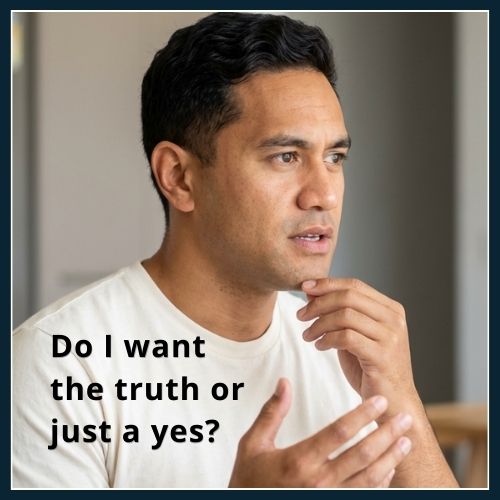
The Habits That Make People Enjoy Talking To You

Every now and then you meet someone who is just easy to be around. Conversations with them don't feel like work. You leave feeling heard, or lighter, or like you said something you hadn't planned on saying and it came out fine.
A lot of it comes down to a handful of habits. Here's what they look like.

People Enjoy Conversations That Feel Easy

Stay In The Conversation

When someone is talking to you they can tell if you are really listening or just waiting for your turn to launch.
They’re explaining something and you're holding eye contact and even nodding, but it’s the type of nod that tells them you’ve caught the general gist of what they said and moved on. Now you’re waiting for them to pause so you can jump in.
They can always tell, because your response is either too quick or was clearly built from the first part of the conversation. You’d stopped listening to them about two thirds of the way through and started drafting.

Give People Room To Think And Speak

Let People Finish Their Thought

Have you ever cut someone off mid-sentence? They’re in the middle of telling a story and you've already decided how it ends before they’ve finished it. Or they're making a point and you’ve taken it somewhere else and given it a totally different meaning. That happens because you assume you’re both on the same wave-length. But when it keeps happening those around you might start to ‘cut a long story short’ and quietly leave out the parts they suspect won't get heard anyway.


Leave A Little Space Before You Reply

When someone stops speaking, you might feel the urge to react immediately. It helps to show you heard them, it keeps the energy moving, and fills the silence before it gets awkward. But if you take a moment before you speak up, that pause shows the other person that you let it sink in, and you understood it before jumping in with your opinion.

Ask Better Questions

Give People Something To Work With

When you ask someone "How's work", it’s not clear if you’re asking about their colleagues, their workload, their boss, the new project they started, the new building they moved into, or the promotion they wanted. If they can’t decide what part of work you're asking about, they’ll probably respond with “Yeah, work’s fine” and leave it there.
But when you ask "Did the new role turn out how you expected" or "Is that project still doing your head in", those are proper questions that have a direction. It’s clear you’ve been listening, and makes it easier for the other person to pick up the conversation.

Follow The Interesting Thread

You're talking to somebody and casually mention something unique. Maybe you spent six months working as a lifeguard in Ghana. Maybe you spent ten years as a chef before becoming an accountant.
It gets a quick "that's interesting" before the conversation heads somewhere else. But, every now and then, somebody stops and says: "Hang on, you did what?" They want to know how it happened, what it was like and whether you'd do it again.

Share Without Taking Over

The Conversation Is Not A Relay Race

You tell someone about a difficult week. Before long you're listening to their difficult week.
You mention a problem you're trying to solve. Two sentences later you're hearing about the time they dealt with something similar. You tell a story and somehow end up sitting through somebody else's version of it. Sharing your own experiences is part of conversation. The trouble starts when every road leads back to you.

Bring It Back To Them

If somebody says: I had a terrible week. and you say: I know exactly what you mean. Last month I had one of those weeks where everything went wrong…,that's not a problem.
The problem comes next. Do you hand the space back or do you continue? That’s the moment where the conversation either remains shared or becomes yours.
Because one version says:
Here's my story
The other says:
What happened with you?

Make People Feel Comfortable

Stop Trying To Be Impressive

You know the type. Every story has a punchline and every conversation has a comeback ready to go. They rarely miss an opportunity to get a reaction. You came away thinking they were quite entertaining. But you also felt a bit drained by the performance.
Then there's the conversation that somehow survives three topic changes, a drink refill and half the evening. You walk away wondering where the time went because neither of you seemed to be trying very hard.

Stop Judging Everything.

Say somebody tells you they collect vintage train tickets. Instead of curiosity you reply: "Erm... really? Why?" or "That's an unusual hobby to have." Suddenly they feel like they have to explain themselves.
Maybe they mention a film they liked and within thirty seconds they're defending their choice as though they've just published a review in a national newspaper.
You’ll get filtered responses if people think you constantly judge everything and anything.

Be Easy To Talk To

Make It Safe To Be Imperfect

You say:
To be honest, I'm struggling a bit.
and immediately think, "I wasn't planning to tell anybody that today". Then you pause, partly from the shock of blurting that out but also to see what happens next.

There are people who make you feel so relaxed to where you can say something a bit stupid, change your mind halfway through, or admit you're not sure about life, without them making a big deal out of it. Then there are the ones who change their energy. They’ll either fire back with something more shocking, change the subject, or have that 'face' that lets you know that you’ve shared too much.

Why People Remember Good Conversations

Nobody gets home and says:
"That person maintained excellent conversational flow patterns."
They say:
"I could talk to them for hours."
"They were easy to talk to."
"I felt comfortable around them."
"They seemed genuinely interested."
People remember conversations because they felt comfortable being themselves.
Try one of these next:
crosschevron-down