How To Layer Oversized Clothes Without Looking Sloppy

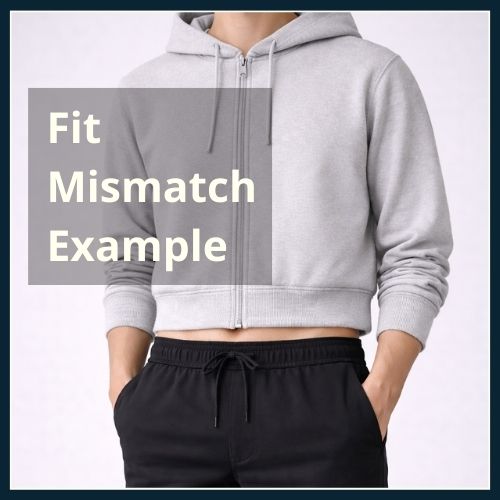
Plenty of men have tried this at some point: You put on a crewneck, an oversized hoodie, then add a coat. You look in the mirror and the pieces are good, the colours work, in fact nothing is wrong with any single item. But somehow you still look like you borrowed clothes from someone two sizes bigger. 
You’d assume that adding more layers to an outfit would make it more interesting, but sometimes it looks more like a pile of washing than a deliberate outfit decision.

Oversized Layering Loses Its Shape When Every Layer Adds Volume

Oversized Clothing Already Carries Visual Weight Before Layering Starts

Oversized clothing like a big hoodie, a wide-cut shirt, or a spacious knit top, already changes your overall shape. These pieces push your shape outward, and that's even before anything goes on top of them. On their own, they look great. But when you layer over them, your starting point is already expanded sideways.
Which means that you are adding layers to a top that has already taken up space, and each extra piece of clothing you add to the outfit has to find somewhere to sit on top of all of that.

When Every Layer Adds More Volume The Silhouette Has No Direction

A silhouette needs to taper, or widen somewhere, or at least have some kind of direction that can be followed from top to bottom. If every item of clothing adds extra fabric in every direction at the same time, the shape has nowhere to go and just expands in all of them at once.
And that is the main problem with heavy oversized layering. You lose shape. Now you just have a general area where clothing is happening.
The Eye Sees The Outline Of An Outfit Before It Sees Anything Else

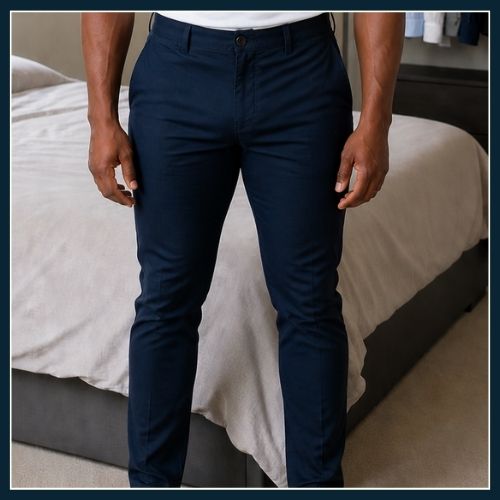
Before anyone notices what you’re wearing, they notice the overall shape of what you are wearing. The individual pieces, colours, textures, specific items, all of that comes second. The outline comes first.
When that outline is wide and has no direction, nothing else in the outfit gets a fair reading. The shape already tells them everything before the details even register.

The Shoulder Line Decides Whether The Whole Outfit Looks Intentional

Oversized Shoulders On Multiple Pieces Multiply The Problem

One piece of clothing with an oversized shoulder is a sizing choice that works really well when everything else in the outfit is handled properly.

But wearing two or three layers with oversized shoulders in the same outfit pushes the shoulder point further and further away from where the actual shoulder sits. By the time the third oversized piece of clothing is added, the widest point of the outfit is somewhere between the original shoulder and the upper arm. It reads as wide before it reads as ‘nice colours’, ‘cool accessories’, ‘quality fabric’, ‘expensive designer brand.’

The Outermost Shoulder Line Is The One That Controls Everything Else

Whether it is an oversized coat, a hoodie or overshirt, the last layer you put on must have a shoulder that sits right where your actual shoulder is. So even if everything underneath the last layer is relaxed and roomy, the last layer gives the outfit one clear shape from top to bottom.

Everything Below The Shoulder Follows Whatever The Shoulder Decides

When the shoulders of your clothes sit on your actual shoulder, the chest won’t look sloppy, the clothing on your torso hangs straighter, and the layers underneath won’t push your shape outward unnecessarily. 

When the shoulder drops too far out of place the opposite happens. The upper half immediately looks wider and heavier because the fabric has no clear point to fall from anymore. The chest is spread outward, the torso looks boxy, and everything underneath hangs away from the body instead of following it down naturally.

The Length of Layers Controls Whether Each Piece Can Be Seen

When Hems Land At The Same Point The Layers Merge Into One Shape

The whole point of layering is that each item of clothing stands out as its own piece rather than getting lost in everything else. When an overshirt, a hoodie, and a coat all finish around the same hip line, the pieces don’t look like separate layers. Step back a few feet and the top half looks like one piece instead of three separate ones.

Each Layer Needs Enough Length Difference To Register On Its Own

You want to make sure that each layer you wear stands out as its own piece. There should be a decent gap between where one hem ends and the next one starts, and it should be obvious at a glance - a few centimeters difference won’t work
Say you wear a longline tee, put a flannel shirt over it and top it off with a bomber jacket. The tee should be the longest piece of clothing in the outfit with the hem at mid crotch, the flannel shirt hem should hit the high crotch, while the bomber jacket hem sits at the hip area.. Now, even if the pieces are the same colour, there are three separate pieces instead of one combined mass. 

Heavy Fabrics Stack Density Faster Than Most Men Expect

Thick Fabrics Add Physical Mass Not Just Warmth

Some tops have natural thickness because of the fabrics they are made of. A quilted jacket, a heavy fleece hoodie, a chunky wool knit all look fine when they are worn on their own.
Put two of them on top of each other and you have double thickness and it shows. Instead of it hanging straight down, the jacket is pushed away from the body by all the padding and stuffing packed underneath it.

Stacking Multiple Heavy Fabrics Creates Congestion Rather Than Layers

You want your outfit to be layered, not congested. Layering is when different pieces work alongside each other and can move naturally. Congestion is when so much thick material has been stacked together that your outfit doesn’t move.

If you wear a thick padded overshirt over a thick fleece crew neck, that is congestion. Two things will happen: the overshirt will pull at the shoulders, and it won’t hang properly because it can’t press down the thick crew neck underneath it. There’s nothing technically wrong but the outfit looks stiff and stuffed because of how those thick fabrics work against each other.

Lighter Fabrics Make Oversized Layering Easier To Control

It's easy to keep shape in your outfit when you wear a lighter layer like a long sleeve tee underneath a heavier layer like a sweatshirt. Because the tee is lightweight, the sweatshirt can hold it in place. Now there is enough room for a chore jacket, overshirt or relaxed blazer to sit on top of the outfit without being forced outwards by the layers of clothing underneath. You still get the relaxed proportions but the outfit keeps its shape instead of expanding everywhere at once. The shoulder and hem rules still apply here because thinner fabrics don't fix bad proportions.

Oversized Outfits Need Fixed Points To Stop The Shape From Floating

Visible Edges Stop Oversized Clothing From Blending Together

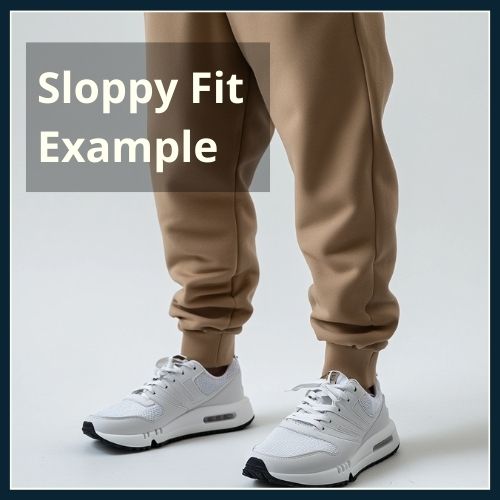
Oversized clothing still needs a few clear finishing points somewhere in the outfit. If the sleeve cuffs cover the hands, or the trousers collapse over the shoes, or the neckline disappears underneath layers, the whole outfit melts into one soft shape.
Sleeve cuffs should finish around the wrist instead of swallowing the hands. A cleaner trouser break helps separate the trousers from the shoes underneath, while a visible crew neck or zip opening stops the upper half from looking like a continuous wall of fabric.
The proportions can still be loose and relaxed. The outfit just needs enough visible edges that each piece still feels separate from the next.

Oversized Clothing Stops Working When The Outfit Starts Looking Theatrical

There Is A Point Where Oversized Stops Reading As Style And Starts Reading As Costume

Oversized clothing is supposed to show that you wore your clothes loose on purpose. That is why it looks good when it’s done right. But there’s a point where the outfit stops being something you chose and starts being something that happened to you.
Wide trousers, a massive coat, an oversized hoodie and a long knit can all work on their own. Push all of them too far at the same time and the outfit stops looking relaxed and starts looking ridiculous instead.

Oversized Clothing Has To Survive Movement

You stand in the mirror and admire your oversized outfit, you look cool and put together. Everything is fine - until you start moving around in it. The sleeves bunch at the wrists, trouser hems cover the shoes, long layers that ride up when you sit down need to be pulled down when you get back up, and oversized pieces catch and fold into each other as you walk.
Oversized might look dramatic in a photograph, but real life movement puts pressure on all the extra fabric at once. Instead of relaxed, the outfit looks awkward because there is simply too much material moving around but not enough control to hold it all together.

Restraint Is What Stops An Oversized Outfit From Getting Away From You

Wearing just one very oversized item in an outfit usually works fine. Beyond that, the outfit will attract attention for the wrong reasons. The outfits that feel genuinely easy and relaxed are usually the ones where most pieces are sitting at a moderate version of their size, and just one is doing something more obvious with its proportions. That one piece of restraint is the difference between looking like you chose the outfit and looking like the outfit chose you.
Don’t miss these while you’re here.
crosschevron-down