8 Red Flags You Should Never Ignore

Some behaviours in dating tell you everything you need to know early. Attraction makes you overlook things you’d normally catch. You rationalise, soften the edges, and give chances that weren’t earned. The cost is time, energy, and peace. 

Red Flags and Warning Signs in Modern Dating

early signs of toxic behaviour

You meet someone. The chemistry is strong. You spend more time together, and before you know it, months have passed and you’re wondering how you missed the signs. 

You need to be intentional, not paranoid. When someone shows patterns that damage your well-being, you need to notice early

Why Red Flags Matter More Now

Apps speed up the start of dating but slow down deeper awareness. It’s easy to fall into something before you’ve really figured out who you’re dealing with.

Intentional dating means being selective and paying attention to behaviour patterns. Red flags don’t fade with affection. They reveal how someone handles pressure, communication, and respect.

The Difference Between Yellow Flags and Red Flags

Yellow flags make you pause, but can be figured out with a simple discussion. Different schedules, personal habits, or past relationship concerns can often be worked through.

Red flags signal deeper problems. These are patterns that keep showing up. If you find yourself repeatedly explaining away someone’s behaviour, that’s your answer.

Dating Red Flags For Men

Healthy dating goes both ways.
We'll reveal eight red flags, what they look like, and what to do when they show up.
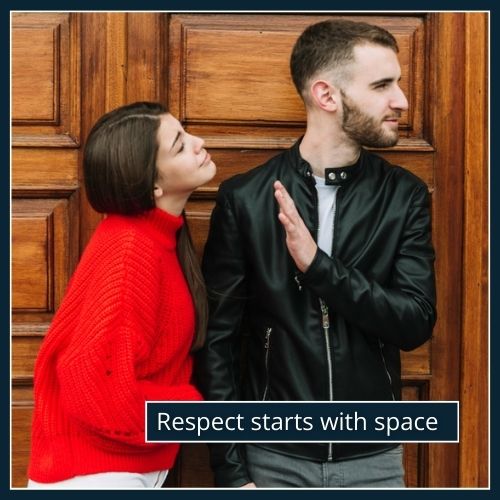
A man steps back slightly with his hand raised as a woman leans in to talk, showing a clear moment of ignored personal space.

Red Flag #1: They Disrespect Boundaries

You ask for space and they push in anyway. You decline an activity and they pressure you. You express discomfort and they brush it off like it’s nothing.
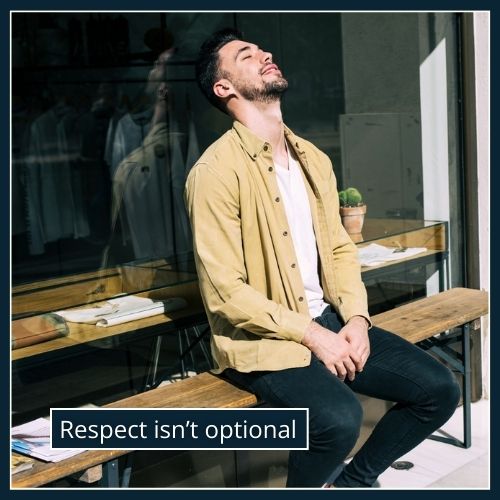
A man sits alone at a café table, leaning back slightly with an empty chair opposite him, symbolising emotional distance and lack of respect in a relationship.

Why Disrespecting Boundaries Is a Problem

Respect is the foundation. When someone ignores your limits, the relationship becomes one-sided. Boundary-breaking grows over time and turns into bigger issues.

How to Respond to Boundary Issues

State your boundary once. Watch how they respond. If the behaviour repeats, walk away. 

Why?
A relationship can’t grow if one person keeps pushing past limits. When you respect boundaries on both sides, things stay calm, clear, and fair for everyone.

Real-World Example of Disrespecting Boundaries

You tell her you’re not ready to meet her family, and she brings it up again a few days later. Before you take it as pressure, think about why she’s asking.

Meeting family can feel like security for her, especially when her own friends or relatives are pushing for clear direction.

If you’re unsure about taking things further, be honest and say that.
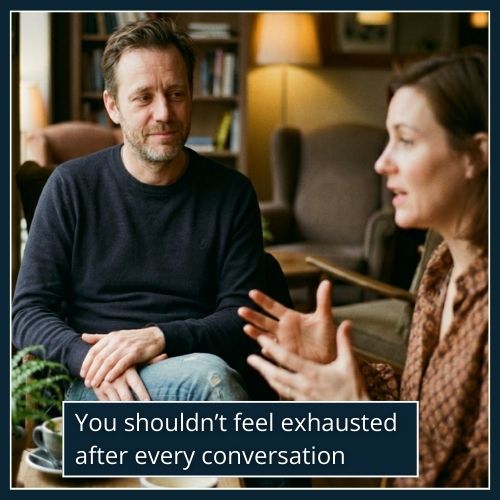
A man listens quietly while a woman talks, his expression calm but weary, reflecting emotional fatigue from constant negativity.

Red Flag #2: Constant Negativity or Victim Mentality

Every story they share puts them in the role of the person who was wronged. They never take responsibility. You leave conversations feeling drained.
A man listens quietly while a woman talks, his expression calm but weary, reflecting emotional fatigue from constant negativity.

Why Victim Mentality Is a Problem

If they never own their part in things, the blame will land on you sooner or later

You start carrying stress that has nothing to do with you. It wears you down fast.
A man walks beside a woman who is talking intensely while he listens quietly, showing the weight of constant negativity in a relationship.

How to Handle Constant Negativity

Listen to the way they describe past situations. If they never mention what they could have done differently, that’s important. 

Why?
A relationship works better when both people can look at their own part and talk about it openly. If that’s missing early on, it won’t suddenly appear later.
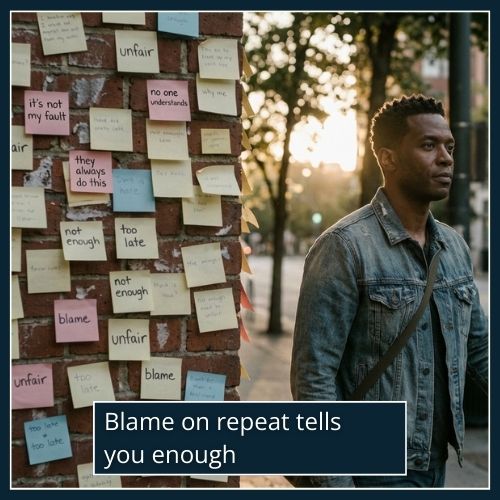
A man walks past a wall filled with handwritten notes of complaints and blame, symbolising repeated negativity and emotional detachment.

Clear Signs of Victim Mentality  in Real Life

Her ex hurt her, her boss is unfair, her colleagues are against her, her friends let her down, and her family don’t support her.

Step back early. You’re not her rescuer, her therapist, or a sponge for everyone else’s behaviour. 

She’s not ready for a balanced relationship — and that won’t change because you’re patient or kind.

Red Flag #3: Love Bombing Followed by Distance

They come in fast with attention, messages, and big words. 

Then the pace drops, plans get pushed, and they go quiet. Just when you start pulling back, they turn the charm back on again.
A bouquet of flowers where some blooms are fresh and others are wilting, symbolising affection that burns out quickly after early intensity.

Why Love Bombing And Sudden Distance Is A Problem

It keeps you unsure of where you stand. That early rush wasn’t real connection, it was a way to draw you in quickly. 

Their distance shows the early intensity wasn’t real.
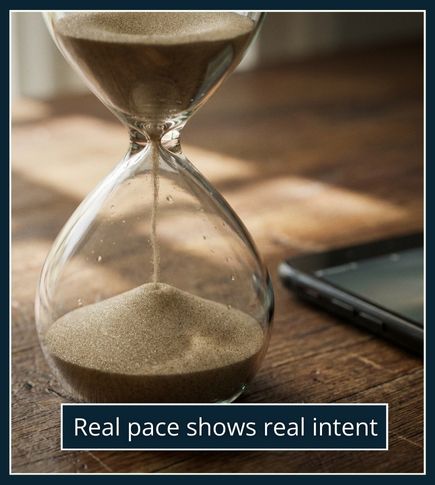
A close-up of an hourglass beside a resting phone on a desk, symbolising patience and taking time to see someone’s real intentions.

How to Deal With Love Bombing

Look at how fast things are moving. If it feels too fast or their mood swings keep you guessing, step back and look at it clearly. 

The same goes for your own behaviour — if you catch yourself rushing someone or turning up the pressure early on, slow down. 

A steady start gives both people room to breathe and keeps things real.
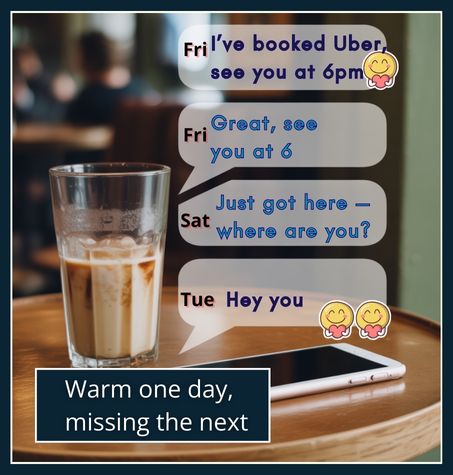
A phone on a café table with floating text bubbles showing confirmed plans followed by silence, then a casual message days later, symbolising inconsistency and mixed signals.

Real-World Example of Love Bombing And Sudden Distance

You make plans for Saturday. They offer ideas, time and meet up place and even texts on Friday evening to confirm. On Saturday, they don't turn up, call or text - and there's no clear reason.

Two days later they message you like nothing happened, full of warmth and compliments. They act as if the missed plans were a small thing. It shows they want the closeness without the consistency.
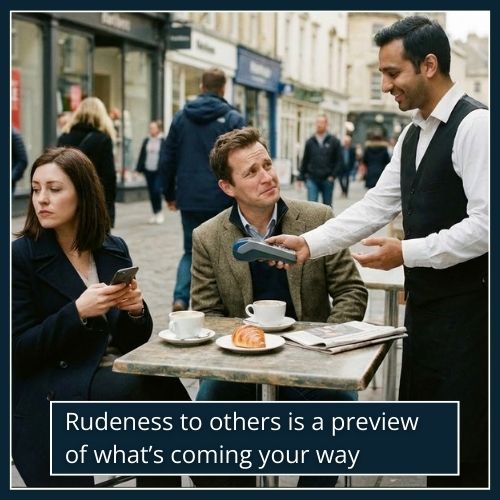
A man at a café table looks uneasy as his date gestures impatiently at a waiter, showing disrespect toward service staff.

Red Flag #4: They’re Rude to Service Staff or Strangers

Snapping at waiters. Talking down to drivers. Rolling their eyes at baristas. It’s behaviour they think you won’t notice - but you should.
A man sits at a café table looking uncomfortable while a woman beside him dismisses a polite waiter offering a card reader, showing clear tension and rudeness toward service staff.

Why Rudeness Is A Problem

The way someone treats people they don’t need anything from shows you who they are. 

If they’re sharp or dismissive with others, that attitude doesn’t stay contained. It finds its way into the relationship sooner or later.

A Common Scenario Of Rudeness To Strangers

You’re driving together and another car hesitates at a junction. She leans forward, swears at them, and blames the driver for “ruining her day.”

A few minutes later she’s chatting to you like nothing happened. Moments like that show you how she handles pressure.
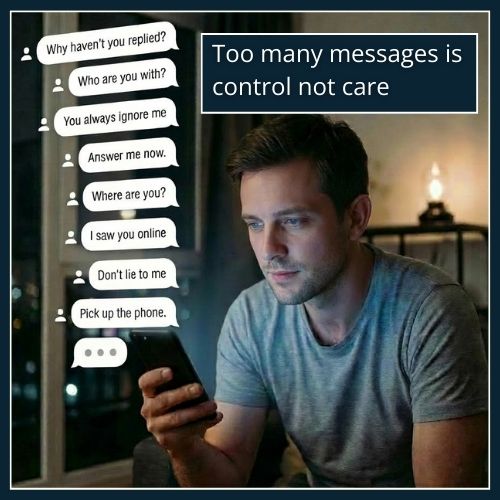
A man stands by a dimly lit window, looking at his phone with quiet frustration. Floating message bubbles above the screen show repeated controlling texts like “Who are you with?” and “Answer me now,” lit by the phone’s glow in a moody evening setting.

Red Flag #5: Excessive Jealousy or Controlling Behaviour

Questions about your day or who you spend time with are normal. Wanting clarity in a relationship is normal.

Problems start when every interaction becomes an interrogation and nothing you say feels enough.
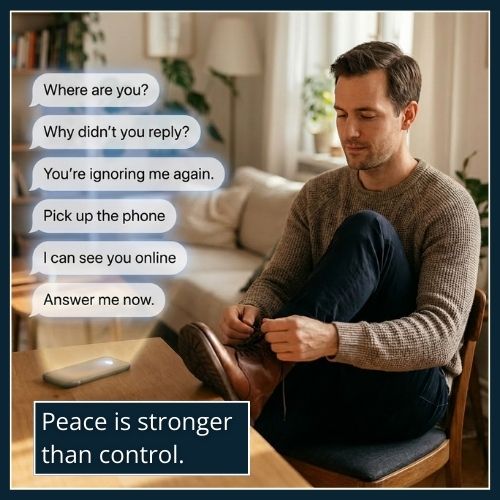
A calm man tying his shoelace beside a phone flashing controlling messages on the table, choosing to leave instead of arguing.

How to Handle Jealous or Controlling Behaviour

Checking in is healthy. Constant suspicion isn’t.

Be clear about what you’re comfortable sharing.

If you value openness, say that. If you prefer shared access to phones or messages in serious relationships, be upfront about it. The goal is trust, not secrets.
A man calmly showing his phone to his partner who looks doubtful with folded arms, highlighting a controlling reaction even after clear explanation.

Real Life Example of Controlling Behaviour

You’re both at home and a message pops up on your phone from someone she has never heard of.

She asks who it is, and you explain. She then asks to see the chat because she wants to be sure nothing odd is going on. That’s a fair request. The red flag isn’t the question or the phone check.

The red flag is when you’ve shown the messages, explained everything, and she still accuses you or brings it up again days later.
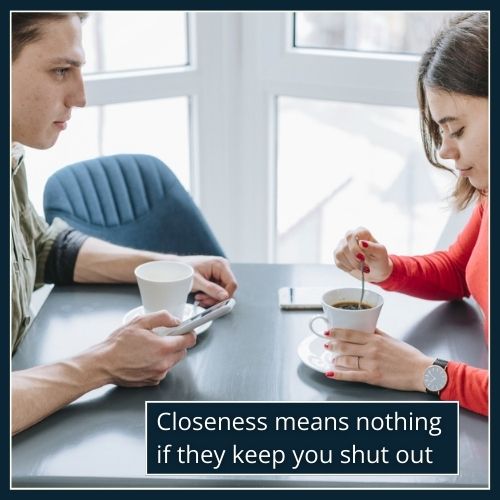
A man and woman sit close together but disconnected, her attention elsewhere while he looks on quietly, symbolising emotional unavailability.

Red Flag #6: They’re Emotionally Unavailable

They enjoy your company but keep the door half-shut.

You try to talk about anything deeper and it slides off them. You’re close, but never close enough to know what you mean to each other.
A man sits alone at a table with two coffee mugs, one untouched, symbolising the imbalance caused by emotional unavailability.

Why Emotional Unavailability Causes Problems

You never get a clear picture of where you stand, which creates mixed signals and stress. 

When one person stays guarded, it stops the relationship from moving anywhere. You end up carrying the relationship on your own.
A man speaks calmly while his partner looks away, illustrating the moment of recognising emotional unavailability.

How to Respond to Emotional Unavailability

Ask what they’re looking for and say what you want in simple terms.

If they pull back, change the subject, or leave everything floating in the air, take that as the answer - even if you don't like it.
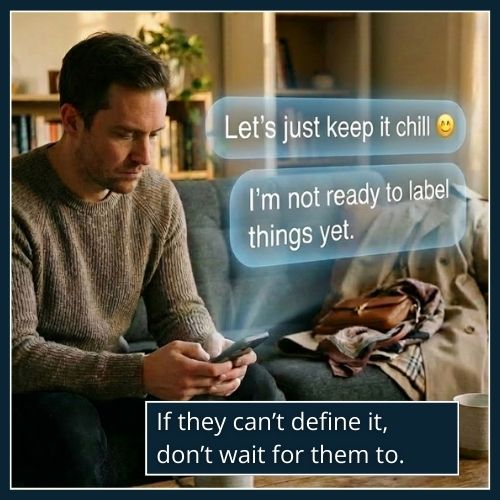
A man sits beside an empty space on a sofa, with 3D message bubbles above his phone reading “Let’s just keep it chill 😊,” showing emotional unavailability.

What Emotional Unavailability Looks Like

You spend most weekends together. You text every day. You do all the things couples do. 

When you finally ask what this is, she says she’s “not sure” and wants to keep it loose. The setup feels like a relationship, but the commitment never shows up.
A man sits back on a sofa looking confused as a woman speaks confidently beside him, showing the imbalance and self-doubt caused by gaslighting.

Red Flag #7: Gaslighting and Manipulation

You bring something up and they shut it down fast. 

They deny what was said, twist the story, and leave you second-guessing your own memory. 

Conversations that should clear things up end with you feeling confused and at fault.
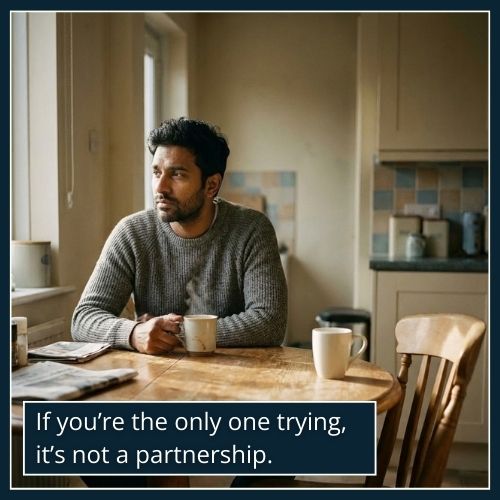
A man sits alone at a dimly lit kitchen table looking thoughtful, symbolising choosing clarity and peace after recognising gaslighting.

How to Handle Gaslighting

Keep your point clear and don’t argue in circles. If every attempt at a calm conversation turns into denial, twisting, or blame-shifting, there’s nothing to fix. 

Regular gaslighting is a sign to end the relationship and protect your mental clarity.

How Gaslighting Looks in Real Life

You tell them you felt uncomfortable at a party because they ignored you for most of the night. 

Instead of hearing you out, they claim you were “imagining it” and say you’re “too sensitive.” 

Later on, you catch yourself wondering if you overreacted, even though your concern was fair and clear.
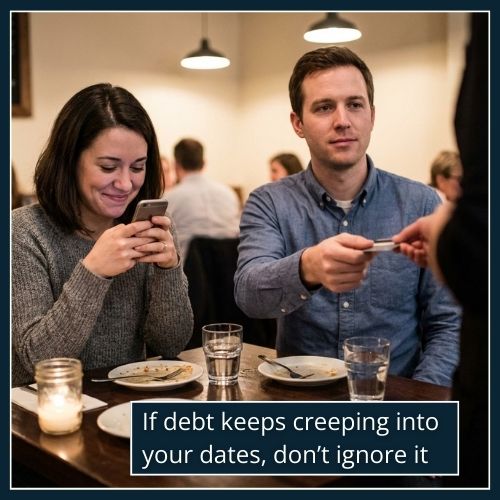
A man pays for dinner while his date looks embarrassed and avoids eye contact, showing hidden financial stress in an early relationship.

Red Flag #8: Chaotic Finances or Hidden Money Issues

Talking about money early gives you a sense of how someone runs their life. 

These chats don’t need to be deep or dramatic. They simply show you how they handle responsibility.
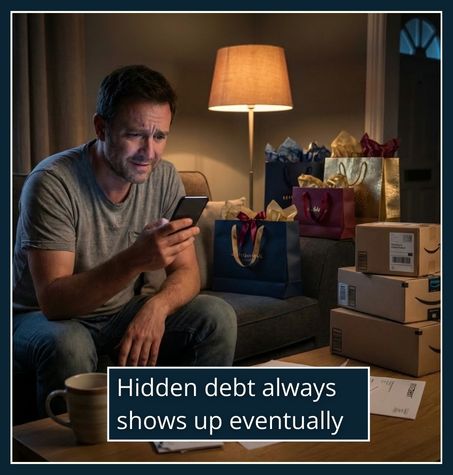
A man looks at his phone beside unpaid bills and shopping bags, showing the strain of a partner’s hidden debt.

Why Financial Chaos Is a Problem

If she’s always borrowing, avoiding bills, hiding debt, or treating gambling like a harmless hobby, take note.

It affects where you can go, what you can plan, and how steady life feels.

When someone can’t manage the basics, you end up carrying problems you didn’t create.
A man in a hallway holding unopened letters and delivery slips notices shopping bags behind a door, showing signs of hidden spending.

How Financial Red Flags Look in Real Life

Parcels arrive all the time, yet she keeps saying she’s “a bit tight this month.” Her card gets declined, she laughs it off, and the costs keep landing on you.

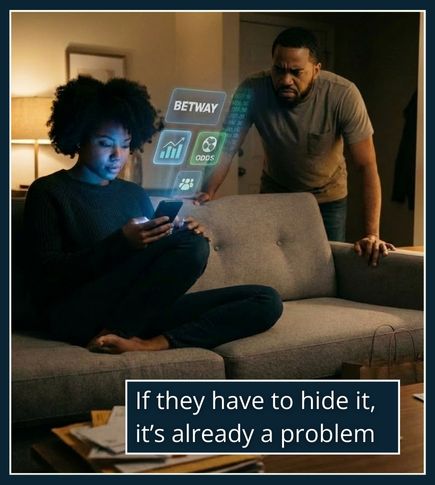
She gets constant bank alerts or flips her phone over when money shows on the screen. Eventually you realise she’s juggling old debt or using betting apps to “catch up.”
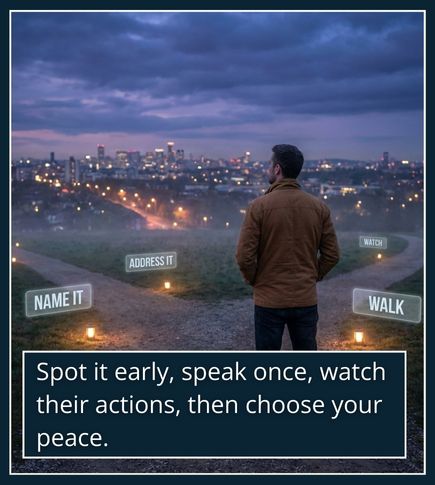
A man standing at a crossroads at dusk with four softly lit paths symbolising steps to handle red flags — name it, address it, watch, and walk away.

4 Steps to Handle a Red Flag

Step 1: Name It

Acknowledge the behaviour for what it is.

Step 2: Address It Once

Have a calm, direct conversation. Give them one chance to adjust.

Step 3: Watch Their Response

Behaviour tells the truth.

Step 4: Protect Your Peace

If the pattern continues, walk away.

Leave a Reply

Your email address will not be published. Required fields are marked *

crosschevron-down